+30 2810 237502 ▾


Lathe Knurling Tool for Ridged Surfaces — 0.5 & 1mm Wheels 35,00 € (inc VAT)

CO2 Laser Power Supply 100W & 150W for Glass Tubes Price range: 343,00 € through 395,00 € (inc VAT)
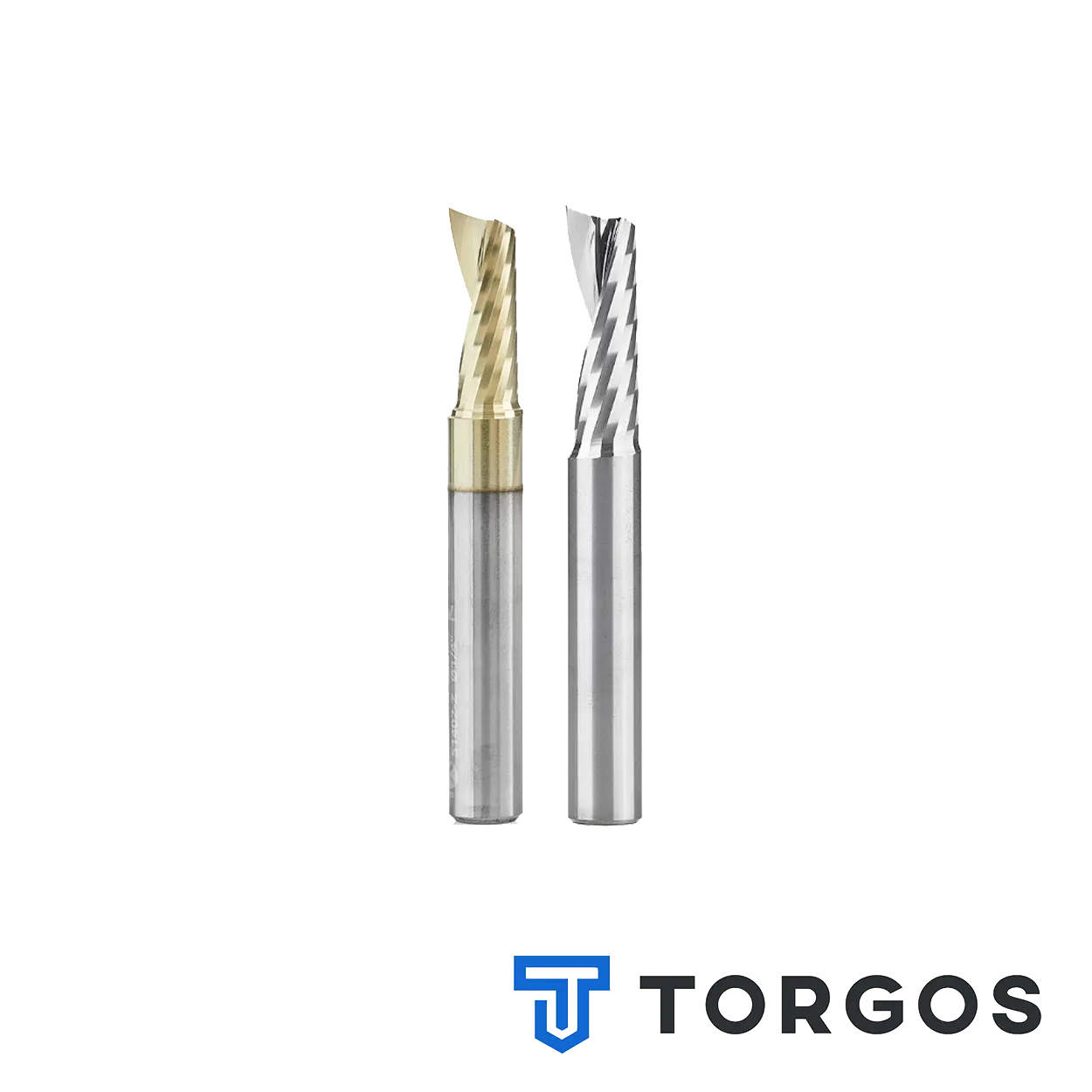
1-Flute Acrylic Bit for Clean CNC Router Cuts
Price range: 8,00 € through 26,00 € (inc VAT)
A single-flute cutter built for clean, melt-free edges on acrylic sheet on a CNC router. Its one cutting edge clears chips fast, keeping the material cool and the finish clear. Suited to signage, displays, and acrylic panel work where edge quality matters.
Περιγραφή
The 1-flute acrylic bit is a single-edge router cutter designed for cutting cast and extruded acrylic sheet on a CNC router. It suits sign makers, display fabricators, and small workshops that need edges clear enough to pass as flame-polished without a separate finishing step.
Acrylic behaves very differently under a cutter than wood or aluminium. Standard multi-flute bits pack the flutes with melted chips that re-weld to the cut edge, leaving a cloudy, rough line. A single cutting edge with generous flute clearance keeps the contact point cool, so the swarf clears before it can soften and stick.
Details / Specifications
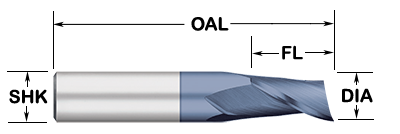
| SKU | Dia (mm) | OAL (mm) | FL (mm) | SHK (mm) |
|---|---|---|---|---|
| 400071 | 2 | 38 | 8 | 3.175 |
| 400072 | 3.175 | 45 | 22 | 3.175 |
| 400073 | 4 | 45 | 22 | 4 |
| 400074 | 6 | 60 | 32 | 6 |
| 400075 | 8 | 60 | 22 | 8 |
Dimensions, data, and technical drawings are provided with reasonable care. Minor deviations may occur due to production batch, without affecting machining quality.
Features of the 1-flute acrylic bit
This 1-flute acrylic bit uses an O-flute or straight single-edge geometry rather than the two- or three-flute layouts common on wood cutters. With only one cutting edge engaged, chip load per rotation is higher, which lets the spindle run at a lower RPM and a faster feed rate while still producing a glassy finish.
That combination — high feed, moderate speed — keeps friction and heat to a minimum, which is the biggest factor in avoiding melted or whitened edges on acrylic. The result is a cut edge that often needs no more than a light flame-polish or buffing pass.
- Single cutting edge for efficient chip evacuation
- Sharp, polished flute geometry that reduces friction and melting
- Suited to cast and extruded acrylic sheet
- Runs at higher feed rates without clogging
- Produces a near flame-polished edge straight off the machine
Where it’s used
Sign makers reach for a 1-flute acrylic bit when cutting letters, logos, and light boxes from cast acrylic sheet, since the clean edge reduces or removes the need for edge polishing before assembly. It also suits point-of-sale displays, machine guards, and internal signage where the cut edge stays visible.
Beyond signage, the same bit profile is used for engraving and profile-cutting acrylic panels for enclosures, control panel overlays, and lighting diffusers. If your shop cuts acrylic alongside wood or MDF on the same machine, see the full CNC router tooling range for the multi-flute bits better suited to those other materials.
What to check before buying
Confirm the shank diameter matches your collet — this bit is not interchangeable across different shank sizes, and a loose fit causes chatter that shows up as a rough edge on acrylic faster than on wood. Check the flute length against your material thickness, since acrylic is prone to melting on repeated light passes.
A common mistake is running a 1-flute acrylic bit at wood-cutting speeds. Too low a feed rate for the RPM lets heat build at the tip and produces a white, frosted edge instead of a clear one. If your CNC software has stored feeds and speeds for wood, they will need adjusting before the first acrylic job.
Installation and maintenance
Mount the 1-flute acrylic bit with enough shank length in the collet to avoid flex, and keep runout as low as possible — any wobble shows immediately as a rippled edge on transparent material. Use a dust shoe or air blast rather than flood coolant, since most acrylic grades are not compatible with liquid coolant contact.
Check the cutting edge for built-up melted acrylic after each job and clean it off before storage, since residue on the flute dulls the edge on the next cut. For background on the material, see poly(methyl methacrylate), the polymer most acrylic sheet is made from.
FAQ
Can this bit cut wood or MDF as well as acrylic? It can, but it is optimised for acrylic; a dedicated wood bit will give a cleaner finish and longer tool life on timber.
What spindle speed suits a 1-flute acrylic bit? Speed depends on diameter and machine, but acrylic generally needs a higher feed-to-speed ratio than wood to avoid melting — check your machine’s material chart before the first cut.
Does it work on both cast and extruded acrylic? Yes, though cast acrylic typically finishes cleaner since extruded sheet is more prone to stress marks near the cut edge.
Επιπλέον Πληροφορίες
| Drill diameter | 02mm, 04mm, 06mm, 08mm, 3.175mm |
|---|
Reviews (0)
Shipping & Delivery


Αποστολή & Παράδοση
Όλες οι παραγγελίες αποστέλλονται με ACS Courier και παραδίδονται σε 1-3 εργάσιμες ημέρες.
Κόστος αποστολής:
- Αποστολή: €5,80
- Αντικαταβολή: €5,50
- Δωρεάν αποστολή για παραγγελίες άνω των €100
Ογκώδη δέματα:
Για ογκώδη ή βαριά δέματα η αποστολή πραγματοποιείται μέσω μεταφορικής εταιρείας με χρέωση στον παραλήπτη.
Αποστολές εκτός Ελλάδας:
Πραγματοποιούνται κατόπιν συνεννόησης. Επικοινωνήστε μαζί μας για περισσότερες πληροφορίες.



Reviews
There are no reviews yet.