+30 2810 237502 ▾


DB25 6-Axis Breakout Adapter for CNC Control Panels 42,00 € (inc VAT)

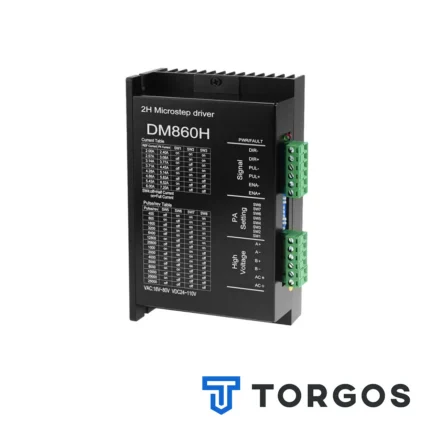
DM860H Digital Stepper Driver for CNC Machines 71,00 € (inc VAT)
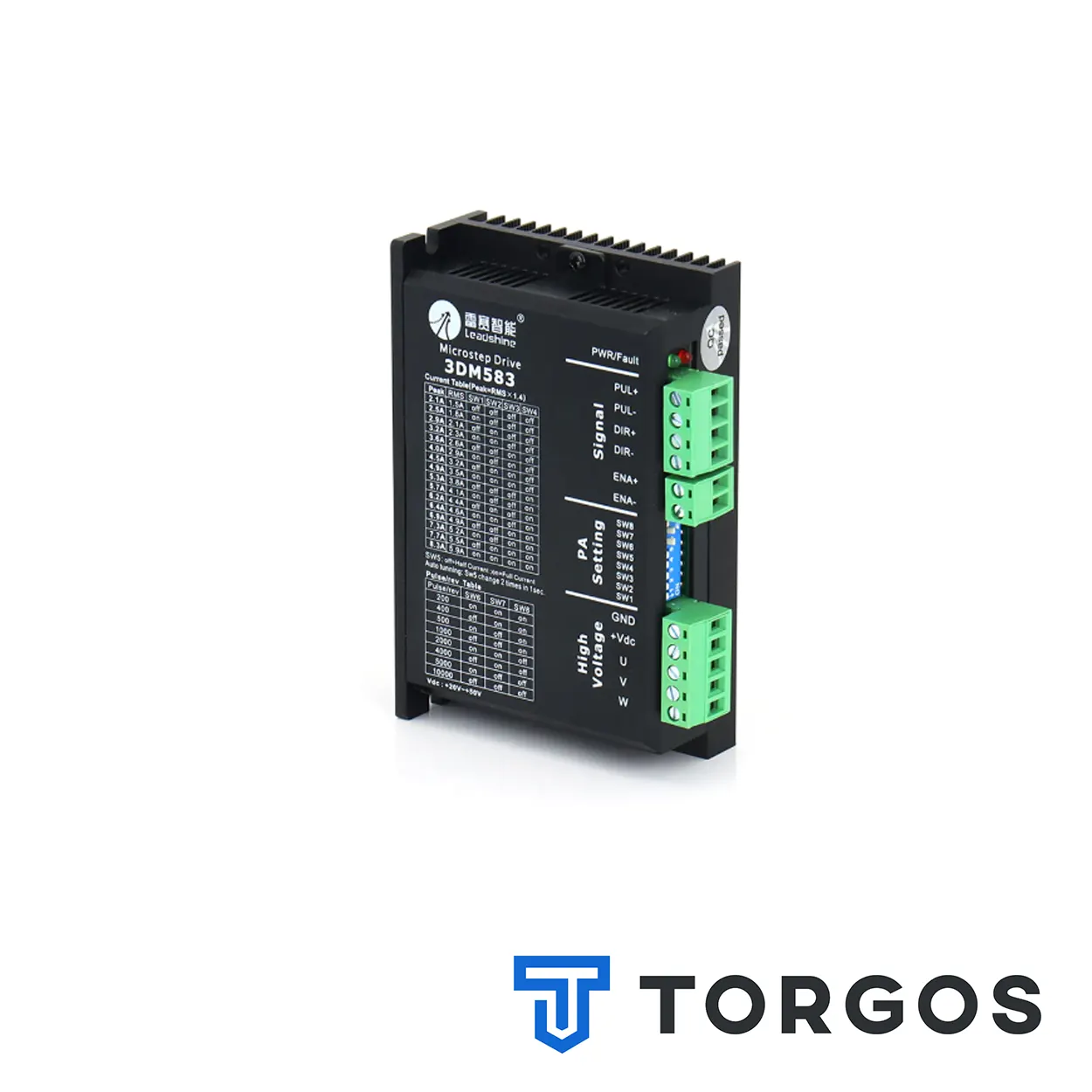
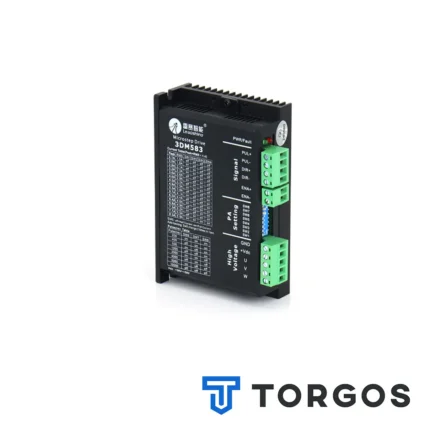
3DM583 Stepper Driver for CNC Motion Control Panels
90,00 € (inc VAT)
The 3DM583 stepper driver is a digital microstepping driver for two-phase and three-phase stepper motors on CNC axes. Current and microstepping are set via dip switches, making it a straightforward replacement for failed or analog drivers in control cabinets.
Περιγραφή
The 3DM583 stepper driver is a digital microstepping driver built to control two-phase and three-phase stepper motors on CNC machines. It reads step and direction pulses from a controller and converts them into precise phase currents at the motor terminals, giving each axis smooth, repeatable movement.
It is aimed at technicians who build or repair control cabinets, replace failed analog drivers, or upgrade an existing setup to reduce motor noise and resonance. Because the settings are configured through dip switches rather than software, it suits workshops that need a straightforward, no-computer setup on the bench.
Features of the 3DM583 Stepper Driver
Unlike older analog designs, the 3DM583 stepper driver uses digital signal processing to generate the current waveform sent to the motor coils. This produces less audible noise at low speed and steadier torque as the axis approaches its top rated speed.
Current and microstepping resolution are both set with onboard dip switches, so the same driver can be matched to a range of NEMA 23 or NEMA 34 stepper motors without extra tools. Typical features include:
- Output current adjustable via dip-switch to match different motor windings
- Multiple microstepping resolutions for finer positioning accuracy
- Built-in protection against overheating and overcurrent
- Compatible with two-phase and three-phase stepper motors
- Optically isolated inputs for step, direction and enable signals
- Low resonance operation across the motor’s speed range
Where It’s Used
The 3DM583 stepper driver is commonly installed in CNC routers, milling machines and laser or plasma cutting tables where each axis needs accurate, repeatable positioning. It is also found in cardboard and paper cutting machines, engraving equipment and other light industrial automation that relies on stepper motors rather than servos.
Panel builders use it to replace a worn or failed driver during a control cabinet repair, or to standardise a machine on digital drivers when upgrading from older analog units. Anyone assembling a new stepper-based axis can browse compatible motors and controllers in the CNC parts shop before wiring the cabinet.
What to Check Before Buying
Before ordering, confirm the driver’s voltage and current range against the stepper motor’s rated phase current and the available supply voltage. Running a motor near the driver’s maximum current for long periods can cause nuisance shutdowns, while an undersized driver will leave the motor short of torque.
Check also that the motor is two-phase or three-phase as required, since wiring a driver to the wrong motor type will prevent it from running correctly. A common mistake is copying dip-switch settings from a different driver model instead of using the values in the 3DM583’s own manual, which can leave the current or microstepping set incorrectly.
Installation and Maintenance
Installation involves wiring the motor phases, the step/direction/enable inputs from the controller, and the DC power supply, then setting the dip switches for the correct current and microstepping before first power-up. It helps to start with a lower current setting and raise it gradually while checking the motor for excess heat.
Once running, the 3DM583 stepper driver needs little ongoing maintenance beyond keeping the enclosure free of dust and ensuring the heatsink has adequate airflow, since heat build-up is the most common cause of premature failure. For background on how the driver’s step signals relate to motor operation, see the stepper motor reference on Wikipedia.
FAQ
What motors work with the 3DM583 stepper driver? It supports two-phase and three-phase stepper motors within its rated voltage and current range, commonly NEMA 23 and NEMA 34 sizes.
Can the current and microstepping be changed later? Yes, both are set with onboard dip switches, so they can be reconfigured at any time without opening the driver.
Does the driver need a separate controller? Yes, it requires step, direction and enable signals from a CNC controller or motion card; it does not generate motion on its own.
Reviews (0)
Shipping & Delivery


Αποστολή & Παράδοση
Όλες οι παραγγελίες αποστέλλονται με ACS Courier και παραδίδονται σε 1-3 εργάσιμες ημέρες.
Κόστος αποστολής:
- Αποστολή: €5,80
- Αντικαταβολή: €5,50
- Δωρεάν αποστολή για παραγγελίες άνω των €100
Ογκώδη δέματα:
Για ογκώδη ή βαριά δέματα η αποστολή πραγματοποιείται μέσω μεταφορικής εταιρείας με χρέωση στον παραλήπτη.
Αποστολές εκτός Ελλάδας:
Πραγματοποιούνται κατόπιν συνεννόησης. Επικοινωνήστε μαζί μας για περισσότερες πληροφορίες.
Related products
DB25 6-Axis Breakout Adapter for CNC Control Panels
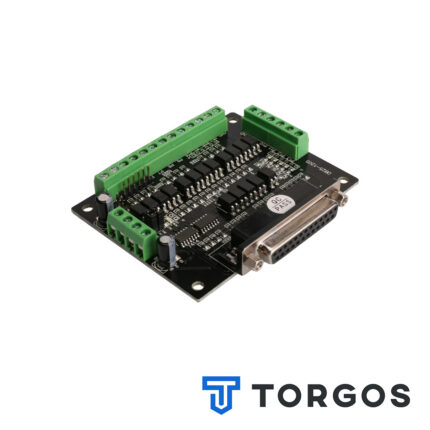
The DB25 6-axis breakout adapter connects a CNC breakout board to up to six stepper or servo drivers through a single standardised port. It replaces scattered point-to-point wiring with labelled terminals, making control panel assembly faster and easier to trace. Suited to routers, plasma tables and other multi-axis CNC builds.





Reviews
There are no reviews yet.